
Table of Contents
ToggleWhy Beginners Need to Learn How to Create a Social Media Content Plan
Many beginners start their social media journey with enthusiasm. They create a page, share a few posts, and hope to gain followers quickly. But after some time, they struggle with a common problem — not knowing what to post next.
This is where understanding how to create social media content plans for beginners becomes important.
A content plan helps you organize ideas, schedule posts, and maintain consistency across your social platforms. Instead of randomly posting content, you follow a simple roadmap that guides your strategy.
When beginners start using a structured content plan, they often notice several improvements.
Advantages of planning social media content:
- You avoid last-minute content stress
- Posting becomes consistent
- Your audience engagement improves
- Content ideas become easier to manage
- You develop a clearer marketing strategy
Even small creators and beginner marketers can benefit greatly from organizing their social media posts in advance.
What is a Social Media Content Plan?
A social media content plan is a schedule that outlines what type of content will be published and when it will be posted.
Instead of deciding content ideas daily, creators organize their posts weekly or monthly. This approach allows them to focus on creating valuable content rather than constantly thinking about new ideas.
For example:
Without planning:
- Random posts appear irregularly
- Content themes change frequently
- Posting gaps become common
With planning: - Posts follow a clear schedule
- Content categories remain balanced
- Followers know what to expect
This organized method makes planning content for social media much easier for beginners.
Why Beginners Should Plan Their Social Media Content
Creating a structured posting strategy offers several benefits for beginners.
- Better Time Management: Planning posts in advance allows creators to dedicate specific time for content creation instead of worrying about it every day.
- Consistent Posting: Consistency is one of the most important factors for social media growth. A schedule ensures that content is published regularly.
- Clear Content Direction: When you plan your social media posts, you avoid confusion about what to publish next.
- Improved Audience Engagement: When content is structured and meaningful, followers are more likely to interact with it.
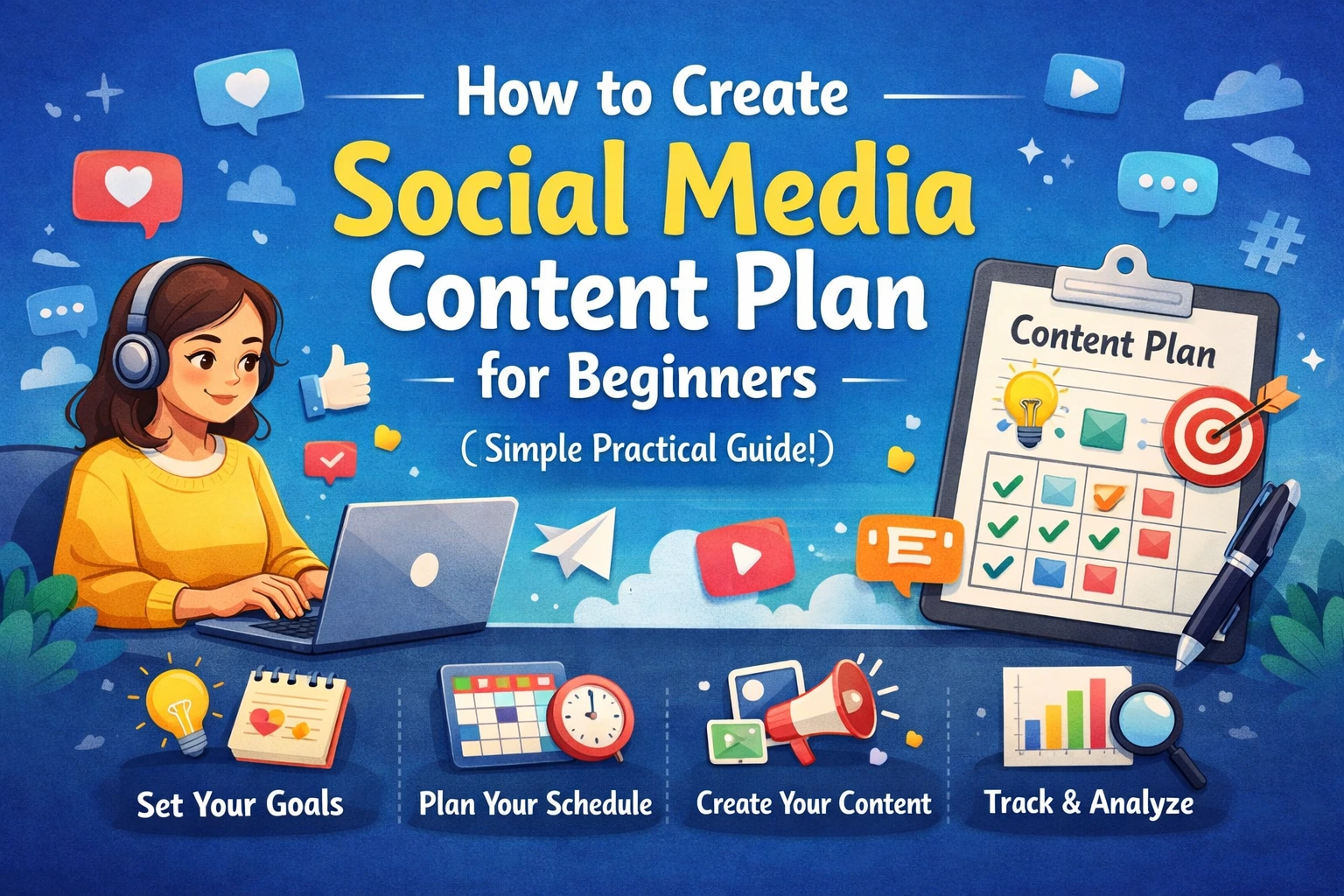
Step-by-Step Guide: How to Create Social Media Content Plan for Beginners
Creating a simple social media content plan does not require advanced marketing skills. Beginners can follow these practical steps.
Step 1 – Select Your Main Platforms
The first step is deciding which platforms you want to focus on. Many beginners try to manage multiple platforms at once, which can become overwhelming. It is usually better to start with one or two platforms.
Common options include:
- YouTube
Choosing fewer platforms helps you manage your posting plan for social media more efficiently.
Step 2 – Define Your Purpose
Before publishing any content, determine the purpose of your social media presence.
Some common goals include:
- Increasing brand awareness
- Promoting products or services
- Driving traffic to a website
- Sharing knowledge or expertise
For beginners, focusing on education and engagement is often the best starting point.
Step 3 – Understand Your Audience
Content becomes more effective when it addresses the needs of a specific audience.
Ask yourself questions such as:
- Who will benefit from my content?
- What problems does my audience face?
- What type of content do they prefer?
Understanding these factors helps you create posts that resonate with your audience.
Step 4 – Decide Your Content Categories
A good content strategy usually includes different categories.
Examples include:
- Educational tips
- Short videos or reels
- Inspirational content
- Questions or polls
- Promotional posts
Combining different formats keeps your social media feed interesting and engaging.
Step 5 – Build a Weekly Social Media Planner
A weekly social media planner is one of the easiest ways to organize your content.
Example weekly schedule:
Step 6 – Develop a Monthly Social Media Content Plan
After creating a weekly structure, you can expand it into a monthly social media content plan. Monthly planning allows you to organize content around events, campaigns, or special topics.
Example structure:
Week 1 – Educational content
Week 2 – Engagement content
Week 3 – Tutorials or tips
Week 4 – Promotional posts
This type of social media monthly plan helps maintain consistency throughout the month.
Example of a Simple Social Media Content Strategy
Here is a simple example beginners can follow.
- Weekly example
Monday – Marketing tip
Wednesday – Educational reel
Friday – Engagement question
Sunday – Personal experience
- Monthly example
Week 1 – Educational insights
Week 2 – Audience engagement
Week 3 – Tutorials
Week 4 – Promotions
Using this structure makes it easier to plan your social media posts and stay organized.
Useful Tools for Social Media Content Planning
Several tools can simplify content planning and scheduling.
Canva Content Planner
- Allows users to design posts and schedule them directly from the platform.
Meta Business Suite
- A helpful tool for scheduling posts on Facebook and Instagram.
Buffer
- Buffer helps manage multiple social accounts and schedule posts efficiently.
Hootsuite
- A popular tool used for monitoring and scheduling social media content.
- These tools make it easier to maintain a structured posting schedule.
Common Mistakes Beginners Should Avoid
Many beginners face challenges when managing social media. Avoiding common mistakes can improve results.
Posting Without a Plan
- Random posts often fail to build a clear audience.
Ignoring Performance Data
- Checking analytics helps identify which posts generate the most engagement.
Over-promoting Products
- Followers prefer valuable and informative content rather than constant advertisements.
- A balanced strategy typically includes educational, engaging, and promotional posts.
Expert Tips for Better Social Media Planning
Here are a few practical tips that can make content planning easier.
Create Content in Batches
- Instead of creating posts daily, prepare several posts at once.
Repurpose Existing Content
- One idea can be reused in different formats such as reels, posts, or carousels.
Maintain Visual Consistency
- Using consistent colors and design styles helps strengthen brand identity.
Analyze Content Performance
- Reviewing analytics regularly helps improve future content strategies.
FAQs
1. How frequently should beginners publish social media posts?
Posting two to three times per week is a good starting point for beginners.
2. What elements should a social media content plan include?
A content plan usually includes:
- Posting schedule
- Content topics
- Platform selection
- Content goals
3. How far ahead should content be planned?
Many marketers recommend planning content one week or one month in advance.
Conclusion
Learning how to create social media content plans for beginners can simplify the entire social media management process.
When you organize your content in advance, posting becomes more consistent and less stressful. Instead of searching for ideas every day, you follow a structured plan that guides your content strategy.
Start with a simple weekly planner and gradually develop a monthly strategy as you gain experience.
If you found this guide helpful:
- Share your thoughts in the comments
- Subscribe to our newsletter for beginner-friendly marketing tips
- Stay connected for upcoming workshops, practical courses, and useful tools that can help you improve your digital marketing skills.