
Table of Contents
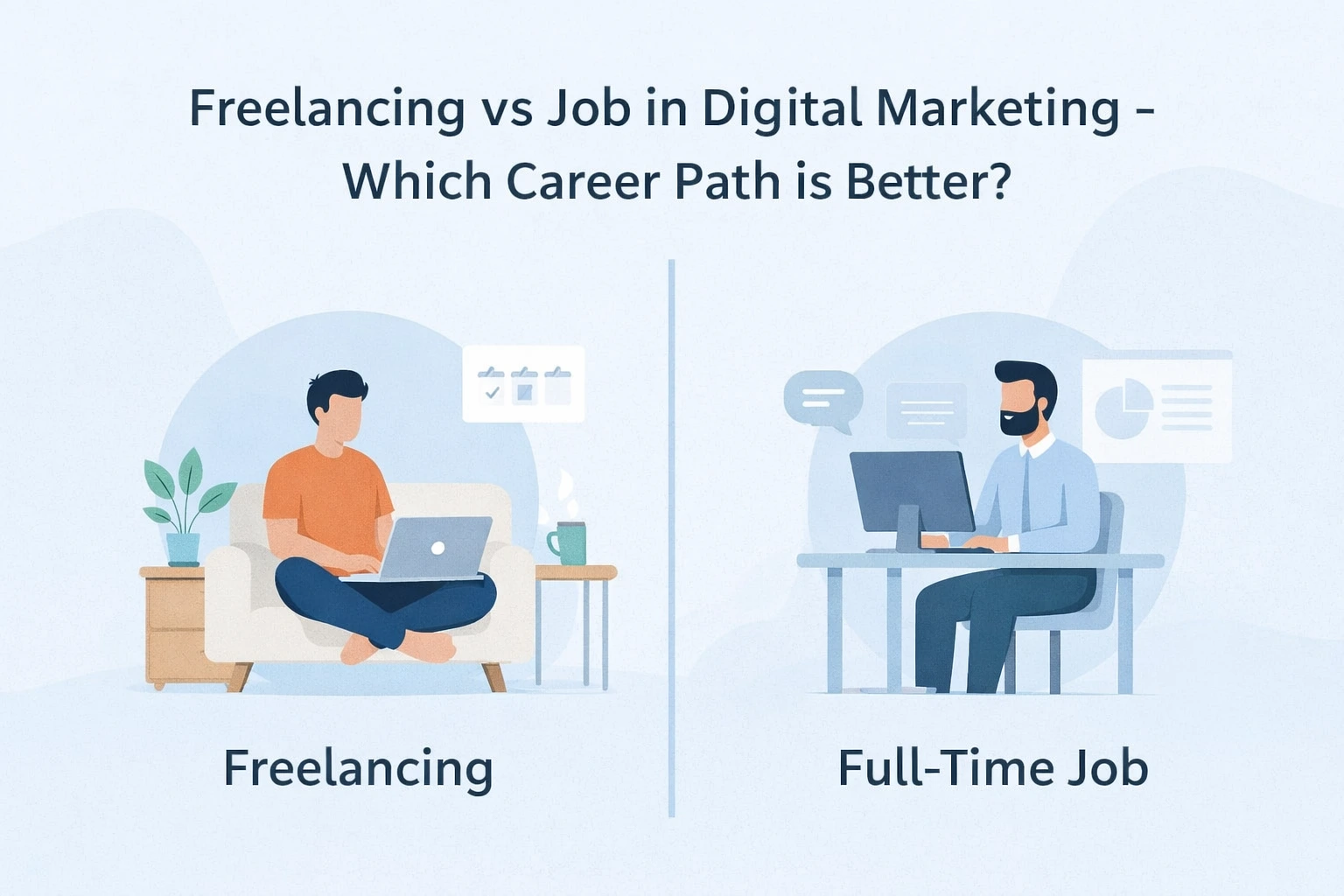
ToggleFreelancing vs Job Which is Better in Digital Marketing?
If you’re thinking about starting a career in digital marketing, one question almost always comes up early
Should you choose freelancing or a full-time job?
At first glance, freelancing sounds exciting. You can work from home, choose your clients, and potentially earn more money. On the other hand, a full-time job offers stability, mentorship, and a structured learning environment.
Because of this, beginners often feel confused about which path is the better choice in digital marketing.
The truth is, there is no universal answer that fits everyone. Both freelancing and traditional jobs can lead to successful careers. The right choice depends on factors like your experience level, financial needs, learning style, and long-term goals.
Digital marketing is different from many traditional careers because it is skill-based. Once you understand important areas like SEO, content marketing, paid advertising, and social media marketing, you can apply those skills in many ways — either by working for a company or offering services independently. Before making a decision, it helps to clearly understand how each path works.
Choosing the right direction can help you:
- build practical marketing skills faster
- gain confidence in real projects
- create a stable income source
- avoid common beginner mistakes
In this guide, we’ll explore freelancing vs job in digital marketing, including the advantages, challenges, and which option may work best depending on your stage in the career journey.
What is a Digital Marketing Job?
A digital marketing job means working as part of a company’s marketing team. Your responsibility is to help the company promote its products or services using digital platforms.
Depending on the organization and role, your daily tasks may include:
- writing blog articles optimized for search engines
- managing social media platforms
- running advertising campaigns
- analyzing website traffic and user behavior
- creating marketing strategies to increase sales or leads
Most beginners start with entry-level roles such as digital marketing executive, SEO executive, or content marketer. These positions provide an opportunity to work with experienced professionals and understand how real marketing campaigns operate.
How a Digital Marketing Job Typically Works
- In most companies, digital marketing professionals work regular office hours, usually around eight or nine hours per day.
- You may work in teams that include designers, developers, ad specialists, and content writers. Each person contributes to different parts of the marketing strategy.
- This team environment allows beginners to learn quickly because they observe how experienced marketers approach different challenges.
Advantages of a Digital Marketing Job
One major advantage of a job is income stability. You receive a fixed monthly salary, which makes financial planning easier.
Another important benefit is structured learning. Companies often provide guidance from senior team members or managers who have experience running campaigns.
You also gain exposure to professional tools and real clients. This kind of practical experience can be difficult to replicate when learning independently.
Some additional advantages include:
- predictable work schedule
- opportunities for promotions
- mentorship from experienced marketers
- access to advanced marketing tools
Limitations of a Digital Marketing Job
- Despite the benefits, jobs do have limitations.
- Your schedule is usually fixed, which means less flexibility compared to freelancing. Salary growth can also be gradual, especially in the early years.
- Some marketers eventually feel restricted by company policies or limited creative freedom.
- Because of these reasons, many professionals later explore freelancing opportunities.
What is Digital Marketing Freelancing?
Digital marketing freelancing is quite different from working a traditional job.
Instead of working for a single employer, freelancers provide marketing services to multiple clients independently.
Freelancers may specialize in areas such as:
- search engine optimization (SEO)
- content writing and blogging
- social media management
- Google Ads and paid advertising
- website optimization
Unlike employees who receive a monthly salary, freelancers are usually paid per project, hourly, or through monthly retainers.
How Freelancing Works in Practice
Freelancers typically find clients through different channels, including:
- freelancing platforms like Fiverr and Upwork
- referrals from previous clients
- networking through professional communities
- personal websites or portfolios
Once a client agrees to work with a freelancer, both parties usually decide on the project scope, timeline, and payment structure.
Freelancers manage their own schedules and workload, which gives them more control over how they work.
Advantages of Digital Marketing Freelancing
Freelancing attracts many people because of the flexibility it offers.
Freelancers can choose when they work, where they work, and which projects they accept. This freedom allows them to design a work style that suits their personal lifestyle.
Another appealing aspect is income potential. Since freelancers are not limited to a fixed salary, they can increase their earnings by working with more clients or offering premium services.
Other benefits include:
- location independence
- the ability to choose projects
- opportunity to build a personal brand
- freedom to experiment with different strategies
Challenges of Freelancing
- While freelancing offers freedom, it also comes with uncertainty.
- Freelancers must find clients on their own. Income may vary from month to month, especially in the beginning.
- It also requires strong self-discipline. Without a fixed work structure, some people struggle to stay productive.
- Managing client communication, project deadlines, and finances can also become demanding if not handled carefully.
Freelancing vs Job in Digital Marketing: Key Differences
Understanding the difference between these two career paths helps beginners make more informed decisions.
Income Structure
- A digital marketing job provides a consistent monthly salary.
- Freelancers, however, earn based on projects or client agreements. This can sometimes lead to higher earnings, but income may not always be predictable.
Work Flexibility
- Jobs generally follow fixed schedules determined by company policies.
- Freelancers enjoy greater flexibility and can decide their own working hours.
Learning Environment
- In a job, learning happens through collaboration with experienced professionals.
- Freelancers often learn through independent research, experimentation, and real client projects.
Job Security
- Traditional employment usually provides higher security due to regular pay and employment benefits.
- Freelancers depend on maintaining a steady flow of clients.
Career Growth
- Job roles offer promotions and internal career growth within organizations.
- Freelancers grow by expanding their client base, increasing service rates, or building agencies.
Freelancing vs Full Time Digital Marketing: Which is Better for Beginners?
- For most beginners, starting with a digital marketing job is usually the safer and more practical option.
- When you work in a company, you gain exposure to real campaigns, team collaboration, and structured learning processes.
- This experience builds a strong foundation and helps you understand how digital marketing strategies actually work in real businesses.
- After gaining one or two years of experience, many professionals begin freelancing on the side.
- This gradual transition allows them to build a client base without risking financial stability.
- However, if someone already has strong skills, a portfolio, and confidence in client communication, freelancing can also work as a starting point.
- The important thing is to focus on skill development first, rather than choosing a path based only on income expectations.
Step-by-Step Guide to Starting a Digital Marketing Career
If you’re unsure about freelancing vs job, following a clear learning path can help.
Step 1: Learn Core Digital Marketing Skills
Start by understanding the fundamental areas of digital marketing.
These typically include:
- search engine optimization
- content marketing
- social media marketing
- paid advertising
- analytics and data interpretation
Learning the basics provides the foundation needed to grow in the field.
Step 2: Practice With Real Projects
- Theory alone is rarely enough.
- Try applying what you learn by working on practical projects. For example, you could create a blog, run small advertising campaigns, or manage social media pages.
- Practical experience helps you understand real marketing challenges.
Step 3: Build a Portfolio
A portfolio is extremely important whether you choose freelancing or a job.
It demonstrates your skills and gives potential employers or clients confidence in your abilities.
Your portfolio might include:
- blog articles
- SEO optimization examples
- marketing strategy documents
case studies or campaign results
Step 4: Choose Your Career Path
- Once you have some practical experience, you can decide whether to pursue a job or freelancing.
- Some people also combine both paths by freelancing part-time while working in a company.
Step 5: Continue Learning and Improving
- Digital marketing evolves quickly. Successful marketers constantly learn new tools, strategies, and platforms.
- Consistent learning is what helps professionals stay competitive.
Helpful Tips for Choosing the Right Path
- If you’re still unsure about freelancing vs job in digital marketing, consider these points.
First, think about your learning style. If you prefer guidance and mentorship, a job environment may suit you better. - Second, evaluate your financial situation. If stable income is important right now, a job may offer more security.
- Third, consider your personality and work habits. Freelancing requires self-motivation and the ability to manage multiple responsibilities independently.
- There is no wrong choice — both paths can lead to rewarding careers when approached with dedication and continuous learning.
FAQ's
1. Freelancing vs job which is better in digital marketing for beginners?
For most beginners, a job provides structured learning, mentorship, and financial stability, making it a practical starting point.
2. Can someone do freelancing while working in a job?
Yes, many marketers start freelancing part-time while working in a company. This allows them to gain experience with clients before transitioning fully into freelancing.
3. How much can digital marketing freelancers earn?
Earnings vary widely depending on experience, skills, and client base. Some freelancers earn modest income initially, while experienced professionals can earn significantly higher amounts.
Conclusion
When comparing freelancing vs job in digital marketing, both options offer valuable opportunities.
Jobs provide structured learning, teamwork, and financial stability, which can be extremely helpful in the early stages of a career.
Freelancing offers independence, flexibility, and the possibility of higher earnings over time.
For beginners, gaining experience through a job often builds a stronger foundation. Later, freelancing can become an excellent way to expand career opportunities.
Ultimately, success in digital marketing depends less on the path you choose and more on your willingness to keep learning, experimenting, and improving your skills.