
Table of Contents
ToggleDigital Marketing Portfolio: What Beginners Should Include
If you’re starting your journey in digital marketing, you may wonder what to include in a digital marketing portfolio and why it matters so much.
A portfolio is essentially a collection of your work that proves your skills. Instead of simply saying you know SEO, social media marketing, or paid advertising, a portfolio allows you to show real examples of your work.
For beginners and freshers, this can make a huge difference when applying for internships, jobs, or freelance opportunities. Employers prefer candidates who can demonstrate their abilities through practical work rather than just certificates.
A well-structured portfolio can help you:
- Show your practical marketing skills
- Build trust with employers or clients
- Stand out from other beginners
- Increase your chances of getting hired
Even if you are just starting out, you can still build a strong portfolio using practice projects, blog writing samples, campaign ideas, and certifications.
In this guide, you will learn exactly what to include in a digital marketing portfolio, along with examples and ideas that beginners can easily follow.
Why Every Digital Marketer Should Build a Portfolio
Many people entering digital marketing focus only on completing courses and collecting certificates. While learning is important, recruiters often want to see practical application of those skills.
A portfolio acts as proof that you can apply marketing knowledge in real scenarios.
How It Helps You Get Jobs and Clients
When you show examples such as:
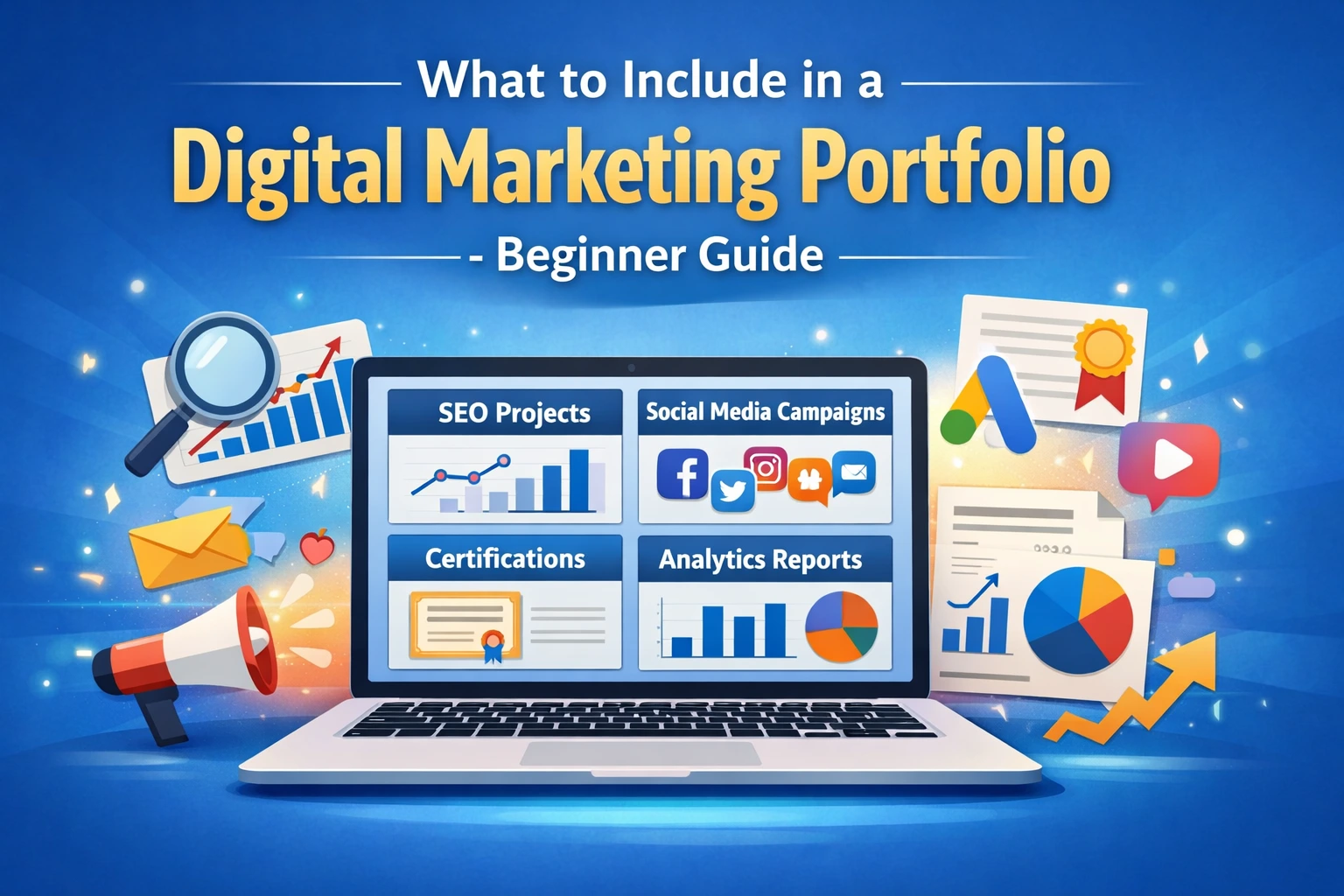
- SEO blog articles
- Social media campaigns
- Google Ads strategies
- Analytics reports
it becomes easier for employers to understand what you can do. Instead of guessing your abilities, they can directly evaluate your work.
Key Benefits of Creating a Portfolio
Building a portfolio offers several advantages:
- Demonstrates hands-on experience
- Highlights your problem-solving ability
- Builds professional credibility
- Increases chances of freelance work
- Strengthens your job applications
Even small projects can make a strong impression when presented properly.
What to Include in a Digital Marketing Portfolio
To make your portfolio effective, focus on adding elements that clearly show your abilities and experience.
1. Personal Introduction
Start with a short section that introduces you to visitors.
Include:
- Your name
- Your area of interest in digital marketing
- Key skills
- Your career goals
Keep this section concise. The goal is to give viewers a quick understanding of who you are and what you specialize in.
Example:
“I am a digital marketing enthusiast focused on SEO, content marketing, and social media strategy. I enjoy helping businesses improve their online visibility through data-driven marketing techniques.”
2. Your Digital Marketing Skills
Create a clear list of your core skills so that recruiters can quickly understand your expertise.
Some common digital marketing skills include:
- Search Engine Optimization (SEO)
- Social Media Marketing
- Content Marketing
- Google Ads
- Email Marketing
- Keyword Research
- Website Analytics
You can also mention tools you have used, such as:
- Google Analytics
- Google Search Console
- Canva
- SEMrush
- Ahrefs
- Meta Ads Manager
This section helps visitors quickly evaluate your technical capabilities.
3. Projects or Case Studies
This is one of the most valuable parts of your portfolio. Instead of simply listing projects, present them as case studies. This allows you to explain your thinking process and strategies.
A simple case study format might include:
- Project objective
- Strategy used
- Tools utilized
- Results or outcomes
Example structure: - Project: Blog SEO Optimization
- Goal: Improve organic visibility
- Strategy: Keyword research and on-page optimization
- Tools: Search Console, SEO analysis tools
- Outcome: Improved keyword rankings and traffic growth
Even practice projects can demonstrate your marketing knowledge.
4. Blog Writing or Content Samples
Content creation is an important skill in digital marketing. If you write blog articles, include links or screenshots of your best work.
Examples could include:
- SEO-optimized blog posts
- Educational marketing guides
- Keyword research articles
- Industry insights
This section highlights your content marketing ability and writing skills.
5. Social Media Work
If you have experience creating or managing social media content, include examples.
You can showcase:
- Instagram posts
- LinkedIn content
- Facebook campaign creatives
- Content calendars
Explain what you aimed to achieve and how the campaign was structured. If possible, include engagement metrics such as reach or interactions.
6. Certifications and Courses
Certificates help validate your knowledge and commitment to learning.
Some common certifications include:
- Google Digital Marketing certifications
- HubSpot marketing courses
- Meta advertising certifications
- SEO training programs
- Analytics certifications
Adding certificates helps build credibility, especially for beginners.
7. Testimonials or Feedback
Positive feedback can strengthen your portfolio significantly.
Testimonials may come from:
- Internship supervisors
- Clients
- Mentors
- Team members
Even short comments can increase trust and show that your work has created value.
Digital Marketing Portfolio Ideas for Beginners
If you don’t have much experience yet, there are still many ways to build a portfolio.
1. Create Practice Campaigns
You can design marketing strategies for imaginary or existing brands.
For example:
- An Instagram growth strategy for a fashion brand
- An SEO plan for a travel website
- A Google Ads campaign for a small business
Explain the approach you would use and why.
2. Start Your Own Blog
Creating a blog is one of the most effective ways to showcase digital marketing skills.
Through blogging you can demonstrate:
- Keyword research
- SEO optimization
- Content creation
- Website management
Over time, your blog becomes proof of your learning and expertise.
3. Manage a Social Media Page
Running your own social media page can help you practice content strategy.
You can show:
- Content design
- Posting schedules
- Audience engagement
- Growth metrics
Even small improvements show your understanding of marketing principles.
Digital Marketing Portfolio Website Examples
There are several platforms beginners can use to build their portfolio.
1. WordPress
WordPress is one of the most popular platforms for creating a professional portfolio website.
Benefits include:
- Custom design options
- SEO-friendly structure
- Ability to publish blogs
2. Notion
Notion is simple and easy to use.
You can organize your portfolio with:
- Project sections
- Case studies
- Content samples
Many beginners prefer Notion because it requires no technical setup.
3. Canva Website Builder
Canva also allows users to create visually appealing portfolio websites.
Advantages include:
- Drag-and-drop design
- Beginner-friendly interface
- Attractive templates
How Freshers Can Build a Portfolio Step-by-Step
Step 1 — Choose a Platform
Decide where you want to create your portfolio, such as WordPress, Notion, or Canva.
Step 2 — Collect Your Best Work
Add examples that highlight your strengths, such as blog articles, campaign ideas, or reports. Focus on quality rather than adding too many projects.
Step 3 — Write Case Studies
Explain your thought process for each project.
Describe:
- The problem
- Your strategy
- Tools used
Results achieved
Step 4 — Show Measurable Results
Whenever possible, include numbers such as:
- Traffic growth
- Engagement rate
- Click-through rate
- Conversion improvements
Numbers make your work more convincing.
Step 5 — Keep Updating Your Portfolio
- Your portfolio should grow along with your experience.
- Add new projects, improved results, and updated strategies regularly.
- This shows that you are continuously learning.
Useful Tools for Creating a Portfolio
Several tools can make the process easier:
- WordPress for building portfolio websites
- Canva for visual design
- Notion for organizing project documentation
- Google Drive for sharing reports and files
- Behance for showcasing creative work
Using the right tools can make your portfolio look more professional.
Tips to Make Your Portfolio Stand Out
To create a strong impression, keep these tips in mind:
- Highlight results whenever possible: Metrics make your work more convincing.
- Keep the design simple: A clean layout improves readability.
- Explain your strategy: Showing how you think is just as important as the final result.
- Focus on your best work: A few strong projects are better than many weak ones.
- Update regularly: Adding new work shows growth and continuous learning.
FAQs
1. What should beginners add to a digital marketing portfolio?
Beginners should include a short introduction, key skills, project examples, blog writing samples, certifications, and case studies that demonstrate their marketing abilities.
2. How can freshers create a portfolio without experience?
Freshers can build a portfolio by creating practice campaigns, starting a blog, managing a social media page, and documenting their learning projects.
3. Is a portfolio necessary for digital marketing jobs?
While not always mandatory, having a portfolio significantly improves your chances because it allows recruiters to see real examples of your work.
Conclusion
Understanding what to include in a digital marketing portfolio can help beginners present their skills in a clear and professional way.
A well-organized portfolio should highlight:
- Your marketing skills
- Practical projects
- Content or campaign examples
- Certifications and feedback
Even if you are new to the field, creating practice projects and documenting your work can build a strong foundation.
Start building your portfolio today and keep improving it as you gain more experience.
If you found this guide helpful:
- Share your thoughts in the comments
- Subscribe to the newsletter for more beginner-friendly marketing guides
- Stay connected for upcoming workshops, affordable courses, and useful marketing tools
Your digital marketing journey becomes much easier when you start showcasing your work early.