
Table of Contents
ToggleWhy Generative Engine Optimization is the New Buzzword in Digital Marketing
If you’ve noticed more people asking tools like ChatGPT or Perplexity a question instead of typing it into Google, you’re not imagining things. Search behavior is shifting toward AI-generated answers, and that’s exactly why Generative Engine Optimization (GEO) has become one of the most talked‑about topics in digital marketing right now.
Generative Engine Optimization (GEO) is the practice of structuring content so AI tools like ChatGPT, Perplexity, Gemini, and Google AI Overviews can more easily read, interpret, trust, and cite it when generating answers. At Digitallyvin, we look at GEO as the natural next step after SEO – not a replacement for it, but an extra layer beginners can start learning today.
Because GEO is still a new concept, different experts define it slightly differently, but most agree that it’s about improving your visibility inside AI-generated answers rather than abandoning traditional SEO.
If you’re a beginner trying to build a career in digital marketing, this is one skill you genuinely can’t afford to ignore. Traditional SEO isn’t going away, but a new layer has been added on top of it, and getting in early gives you a real advantage while most people are still catching up.
What You’ll Learn in This Guide
What GEO actually means, explained in plain English.
How GEO is different from traditional SEO and AEO (as a simple beginner framework).
How AI search engines appear to choose what content to show, based on current public information and testing.
A step‑by‑step beginner strategy to start applying GEO.
Real examples, schema markup, and common mistakes to avoid.
Why This Matters for You as a Beginner
AI‑assisted search is growing fast, and early adopters get more visibility in AI answers.
Appearing in AI-generated answers can bring traffic and brand awareness even without a page‑one Google ranking.
Learning GEO now means less competition, since most beginners haven’t seriously focused on it yet.
GEO builds directly on the SEO skills you may already know – content quality, structure, and topical authority.
What is GEO (Generative Engine Optimization)?
GEO is the process of creating and structuring content so generative AI tools can easily extract, understand, and cite it in the answers they give users. Instead of just ranking on a results page, the goal is to become one of the sources an AI tool trusts enough to reference directly.
Think of it this way: when someone asks a tool like ChatGPT, “What’s the best way to start a YouTube channel?”, the AI doesn’t just invent ideas from nowhere. It draws on content that is well‑structured, credible, and easy to summarize into a clear answer. GEO is about making sure your content is one of the sources it can confidently use.
Since GEO is not yet governed by a single official standard, it overlaps with concepts like “AI SEO” and “Answer Engine Optimization,” but the common thread is visibility inside AI-generated responses
What is GEO vs SEO vs AEO?
These three terms get mixed up a lot, and different experts use them in slightly different ways. The framework below is a simple way for beginners to remember the differences – it’s a teaching model, not a strict industry rule
Aspect | SEO | AEO | GEO |
Goal | Rank on the search results page | Become the featured snippet / direct answer within that page | Get cited or recommended inside AI-generated answers. |
Platform | Google, Bing organic results (SERPs) | Featured Snippets, People Also Ask, some AI Overviews | ChatGPT, Perplexity, Gemini, Google AI Overviews, Claude, and similar tools. |
Content Style | Keyword‑optimized pages with strong on‑page SEO. | Concise, question‑and‑answer format, optimized for direct answers. | Clear, evidence‑backed, citable content with strong structure and expertise |
Key Tactic | Backlinks, keywords, technical SEO, page speed. | Schema markup, ~40–60 word direct answers, intent matching. | Entity clarity, credibility, consensus with other reputable sources. |
Success Metric | Rankings, organic traffic, impressions | Snippet ownership, “People Also Ask” presence, AI Overview inclusio | Citations, brand mentions inside AI answers, referrals from AI tools. |
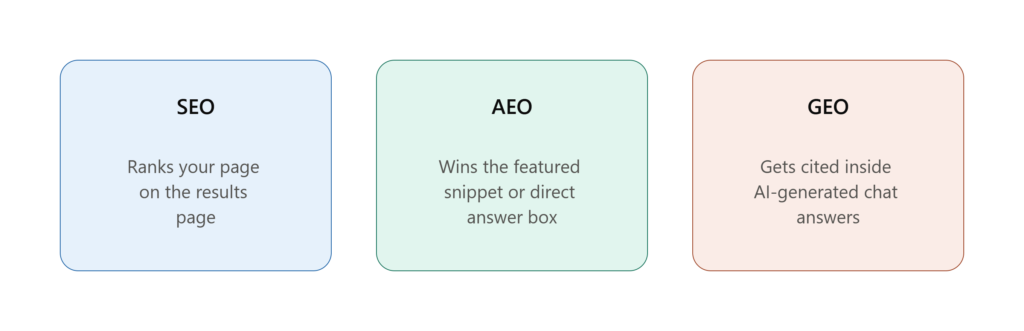
Important beginner takeaway: you usually can’t “skip straight to GEO” with weak SEO. In practice, most AI tools rely heavily on content that’s already considered authoritative or performs well in search, so strong SEO fundamentals remain the foundation that GEO builds on. GEO is also closely related to AEO, so understanding how AEO differs from GEO will help you apply both strategies correctly without confusion.
Why Does GEO Matter for Beginners in Digital Marketing?
GEO matters because a growing share of information‑seeking behavior now ends with an AI-generated answer instead of a traditional click through to multiple websites. If your content isn’t structured for AI extraction and summarization, you can gradually lose visibility even while still ranking on Google.
Here’s why this is worth learning right now:
More users in many markets get quick answers from AI tools and search assistants instead of manually opening lots of pages.
Brands and websites that show up inside AI answers are perceived as more credible and authoritative because they are presented as “trusted sources” by the assistant.
Early movers in GEO will have a head start once it becomes more mainstream, just as early SEO adopters did in the past.
GEO feels like a natural extension of basic SEO skills (content quality, structure, E‑E‑A‑T) rather than a completely new discipline.
Clients and businesses have started asking specifically about “AI visibility” and “AI SEO,” so having GEO knowledge can set you apart in interviews and client pitches.
How Do AI Search Engines Actually Pick Content?
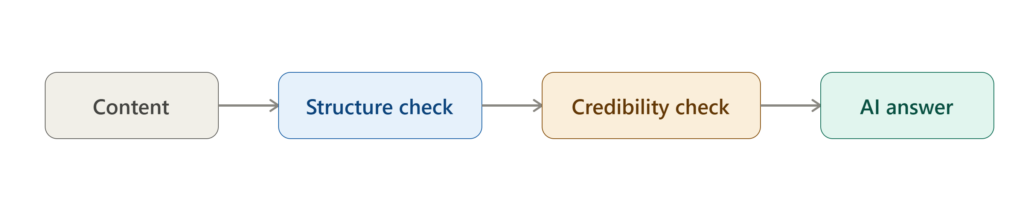
AI search tools scan large amounts of publicly available content, including already‑ranking pages and well‑known sources, and then generate answers based on patterns they’ve learned. They appear to prioritize pages that answer a question clearly, are well‑structured, come from credible sources, and include specific facts rather than vague statements.
The Role of E-E-A-T and Structured Content
You may have already heard of E‑E‑A‑T (Experience, Expertise, Authoritativeness, Trustworthiness) from traditional SEO. It plays an even bigger practical role in GEO, because generative models and AI search experiences are designed to surface content that comes from knowledgeable, trustworthy sources rather than thin, keyword‑stuffed pages.
Structured content also matters a lot. Clear H2s and H3s, short paragraphs, bullet points, tables, and direct answers make it much easier for AI tools to “chunk” your content and pull specific pieces into a summarized response. This same structure helps you win featured snippets and other answer‑type placements in classic search.
Why Entities Matter More Than Keywords
AI systems don’t just match keyword strings; they identify entities (people, brands, tools, places, concepts) and relationships between them. GEO is partly about helping those systems understand who you are, what you do, and what topics you’re an authority on.
For a beginner blog like Digitallyvin, that means consistently connecting your name and brand to the specific topics you cover – for example, GEO, SEO, beginner digital marketing, YouTube growth, or content strategy. Over time, this helps AI tools and search engines associate your site with those topics and recognize you as a relevant entity in that space.
Good entity‑focused practices include using consistent naming, linking to your author profiles, mentioning your brand in relation to your core topics, and earning mentions/backlinks on other reputable sites in your niche.
Step-by-Step GEO Strategy for Beginners
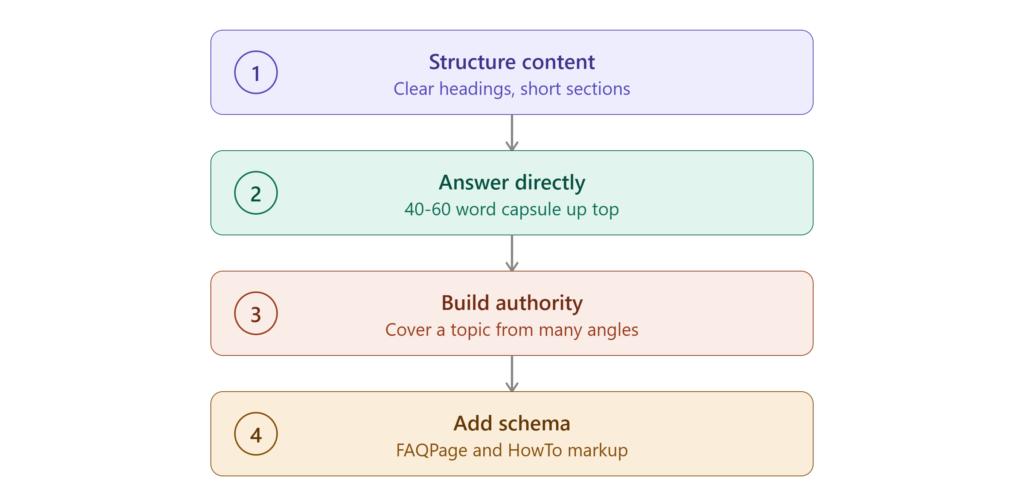
Beginners can start applying GEO by focusing on clear structure, direct answers, and topical authority, rather than chasing secret “AI ranking hacks.” These steps mirror what leading GEO guides recommend today.
Step 1: Structure Content for AI Extraction
Break your content into clear sections with descriptive headings, ideally phrased as questions or outcome‑oriented statements (“What is GEO?”, “How to start with GEO as a beginner”). Avoid long, unbroken paragraphs.
Use:
Bullet points for lists.
Numbered steps for processes.
Tables for comparisons (like SEO vs AEO vs GEO).
AI tools and modern search engines favor content that’s easy to scan and to pull specific pieces from, which also improves human readability.
Step 2: Answer Questions Directly in the First 40–60 Words
Instead of slowly building up to an answer, state it clearly in a short capsule (roughly 40–60 words) right after the heading, then expand with more detail below. This is similar to how many featured snippet and GEO guides recommend writing direct‑answer sections.
In this article, notice how each major heading opens with a direct, simple explanation before diving deeper – that’s intentional, and it makes your content easier for both AI tools and readers to use.
Step 3: Build Topical Authority
Don’t just write one article and stop. Cover a topic from multiple angles across several interlinked articles on your site, like:
“What is GEO?”
“How to optimize blog posts for AI answers.”
“GEO vs SEO: what beginners need to know.”
This shows both Google and AI tools that your website is a genuine authority on the subject, not a one‑off post that happens to mention a trending term. Building topical clusters is a proven SEO tactic that also supports GEO.
Step 4: Add Schema Markup (As Hygiene, Not a Shortcut)
Adding structured data (FAQPage on your FAQ section, HowTo on step‑by‑step guides, Article or BlogPosting on posts) helps machines understand what type of content is on the page and what each section is meant to do.
It’s worth doing as basic technical hygiene, but treat it as a supporting signal, not a guaranteed citation lever. Google has significantly reduced the visibility of FAQ rich results in classic search, and current testing hasn’t shown that adding schema alone reliably increases how often AI tools cite a page. The content itself – clear structure, direct answers, and credible facts – still does most of the real work. Schema markup and fast load times are part of the technical foundation for AI visibility, and this checklist walks you through the key optimizations that support both AEO and GEO.
Common Mistakes Beginners Make with GEO
Many beginners approach GEO like a quick hack or a buzzword instead of an extension of good content and SEO practices. Avoid these common mistakes:
- Writing vague, generic answers instead of specific, factual, and actionable ones.
- Ignoring proper heading structure or skipping question‑format headings that help tools understand intent.
- Copying explanations from other websites instead of adding original insight, examples, or experience.
- Forgetting to revisit and update older content as AI tools, search features, and best practices evolve.
- Focusing only on keywords rather than genuinely answering the reader’s question in a clear, beginner‑friendly way.
- Skipping schema markup entirely, even though basic structured data can help machines understand your pages.
If you avoid these mistakes and follow the steps above, you’re already ahead of most beginners experimenting with GEO in 2026.
Generative Engine Optimization Examples
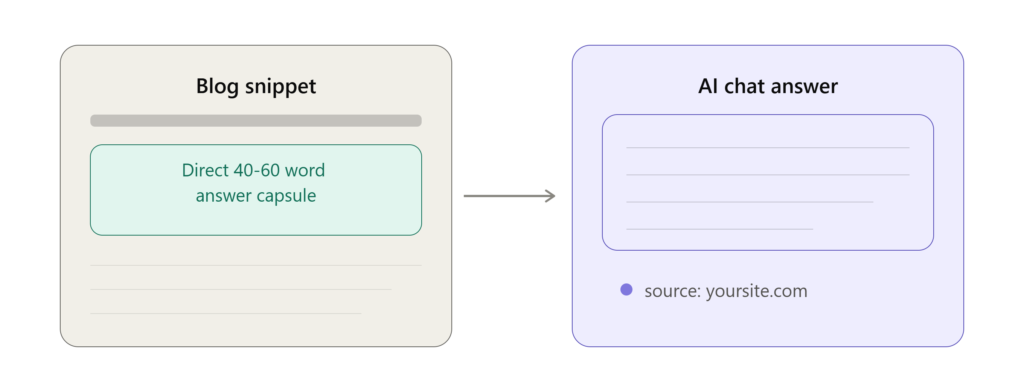
To make this practical, here are a few examples of what GEO‑friendly content looks like in action.
A “What is X” article that opens with a bolded, direct definition (40–60 words) before going into detail – easy for AI tools to lift and use as a direct answer.
A comparison table (like the SEO vs AEO vs GEO table above) that AI tools can quickly reference to explain differences between related concepts.
A step‑by‑step guide with clearly numbered steps that you enhance with HowTo schema, making it easier for search engines and AI systems to understand and reuse instructional content.
Notice how all three examples focus on clarity, structure, and machine‑readability rather than clever wording. That’s the core idea behind GEO: make your content easy for both humans and machines to understand and trust.
Expert Tips, Tools & Insights for GEO
As you advance in GEO, small habits and routines will make a big difference in how consistently your content appears in AI answers. These tips echo what many GEO practitioners recommend.
Use AI tools to test your own visibility.
Ask ChatGPT, Perplexity, Gemini, or other AI tools questions related to your niche and see what websites they reference and cite. This helps you understand what kinds of content are currently being surfaced.Keep content updated.
AI models and search features tend to favor fresh, accurate information, so revisit older articles every 3 – 6 months to update outdated facts, examples, or screenshots.Write like you’re explaining to a beginner.
Simple, direct explanations often perform better in AI answers than jargon‑heavy writing, especially for broad topics like “SEO” or “how to start a blog.”Maintain consistency across your website.
If your site gives conflicting information across different articles, it can hurt trust signals for both SEO and GEO, and confuse models trying to understand your stance.Focus on genuine expertise and experience.
Sharing real examples, case studies, or personal experience (like client work, campaign results, or experiments) strengthens E‑E‑A‑T, which matters a lot for GEO and overall AI‑era visibility.Add schema markup as hygiene, not a shortcut.
FAQPage, HowTo, and Article schema help machines parse your content, but they don’t guarantee featured snippets or AI citations on their own. Well‑structured, high‑quality content still matters more than any single technical tweak.
FAQs
What is GEO in SEO?
GEO in SEO refers to optimizing content so it can be understood, summarized, and potentially used by AI‑powered search tools, in addition to ranking on traditional search engines like Google and Bing. It works alongside SEO rather than replacing it.
What is GEO in digital marketing?
In digital marketing, GEO is a strategy focused on making your brand’s content visible inside AI-generated answers, helping you reach audiences who rely on tools like ChatGPT, Perplexity, Gemini, or Google AI Overviews instead of — or alongside — traditional search results.
Is GEO replacing SEO?
No. GEO works alongside SEO and AEO rather than replacing them. Strong SEO fundamentals – like high‑quality content, clear site structure, technical health, and E‑E‑A‑T remain the foundation, while GEO adds an extra layer focused specifically on AI search visibility and citations.
Conclusion
Generative Engine Optimization is still a fairly new and evolving concept, which means beginners who start learning and applying it now have a real opportunity to stand out in the AI‑driven search landscape.
You don’t need to abandon what you already know about SEO – just build on it with question‑format headings, direct answer capsules, consistent topical authority, sensible schema markup, and genuine expertise. If you do this consistently, you’ll naturally become more visible in both classic search and AI‑generated answers over time.
If you found this guide helpful, I’d love to hear your thoughts in the comments -have you noticed your content showing up in AI answers yet? Feel free to share your experience, subscribe to the newsletter for more beginner‑friendly digital marketing guides, and join the Digitallyvin community as we explore trends like GEO together.